Accessibility
Taking part in research with a screen reader
A practical guide for screen reader users on completing online surveys, handling grid questions, and joining focus groups to share valuable feedback.
Taking part in online interviews and focus groups is a great way to share your opinions. If you use sign language, having a professional interpreter makes the process smooth and clear. Here is how interpretation works during a live research study.
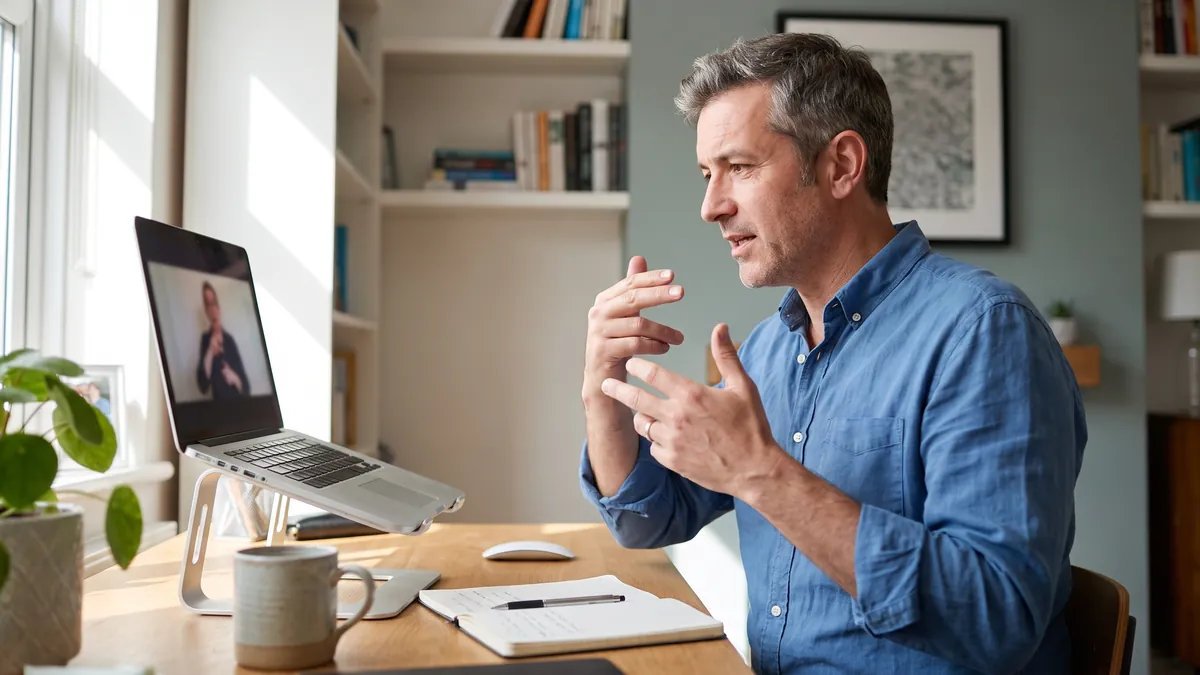
Qualitative research means talking to researchers directly, instead of just clicking buttons on a survey. This happens in live video calls, like a focus group with other people or a one-to-one interview. If you use American Sign Language or another sign language, the research company will usually book an interpreter for you. They want to hear your thoughts, and providing an interpreter is a standard way to make that happen.
When you fill out a short pre-screener survey to see if you qualify for a study, you might see a question about your accessibility needs. Always mention that you need an interpreter right away. The researchers need time to hire a qualified professional. You should also tell them exactly which sign language you use. American Sign Language is very different from British Sign Language or Auslan.
Sometimes, a screener survey does not ask about accessibility. If you are invited to a live interview, reply to the invitation email immediately. Tell the project manager that you accept the invitation and require an interpreter. They will arrange everything on their end. You can read more about taking part in focus groups if you are deaf or hard of hearing in our other guide.
Good video quality helps the interpreter see your hands, face and body language clearly. Before the interview starts, make sure your room is well lit. Try to sit facing a window so the natural light is on your face. If you are doing the study in the evening, place a lamp behind your computer screen. Never sit with a bright window directly behind you, because this turns your body into a dark shadow.
Position your camera so the researcher and the interpreter can see your full signing space. Your head, shoulders and chest should be visible on the screen. If you are using a smartphone, place it on a stand or prop it up on some books. Holding the phone in your hand makes it impossible to sign naturally. Using a laptop or a tablet is usually better for video research.
What you wear can also make a difference. Avoid wearing shirts with very busy patterns or colors that match your skin tone too closely. Solid, contrasting colors make your hand movements much easier for the interpreter to read. We have a full online focus groups: a tech checklist before you join guide with more tips on testing your camera and microphone.
Interpreting a conversation takes a little extra time. The interpreter listens to the researcher, translates the question into sign language, and then translates your signed answer back into spoken English. This short delay is completely normal in interpreted research.
To make the conversation flow well, pause for a second after the researcher finishes talking. This gives the interpreter time to catch up and finish signing the question. When you are taking part in a group discussion, wait until the current speaker is completely finished before you start signing. Many video platforms have a feature that lets you raise a virtual hand when you want to speak. This helps the moderator know you have something to add.
Sometimes, an interpreter will ask you to repeat something or slow down. Do not worry if this happens. They just want to make sure your exact thoughts are shared with the researcher. Taking your time means your opinions are recorded accurately, which is exactly what the research company pays for.
Market research often involves looking at new products, unreleased advertisements or private website designs. Because of this, researchers ask participants to keep the discussion private. You will usually have to sign a non-disclosure agreement, or NDA, before the interview begins. This is a simple legal form where you promise not to talk about the study.
You might wonder if the interpreter is also bound by these privacy rules. The answer is yes. Interpreters are hired professionals who must follow strict codes of conduct. They sign their own non-disclosure agreements with the research company or the agency that hired them.
The interpreter will not share your personal information, your identity or your opinions outside of the video call. You can feel completely safe giving honest feedback. Researchers actually want to hear your real opinions, even if you do not like their new product. For more details on privacy, see our article on recording, consent and NDAs: what you agree to in a research study.
Sometimes, research is conducted entirely by researchers who are deaf or hard of hearing. This is called deaf-led research. In these studies, the researcher might sign with you directly, without needing a third-party interpreter on the call.
Deaf-led research often leads to a very comfortable environment. The researcher already understands your culture and everyday experiences. You do not have to explain basic concepts about living with hearing loss, and you can focus entirely on the topic of the study. This shared background can lead to much deeper and more interesting conversations.
When a study is not deaf-led, interpreters bridge the gap. Having your voice heard in general market research is still incredibly valuable. Companies need to know how all kinds of people use their products. Your feedback helps them design better packaging, clearer websites and more useful services for everyone.
On the day of your interview, plan to log into the video call five or ten minutes early. This gives you time to fix any last-minute software updates. It also gives you a chance to meet the interpreter before the researcher starts recording the session.
Chatting with the interpreter for a minute or two is a great idea. It helps you both get used to each other's signing style and pace. If the study is about a specific technical topic, the interpreter might ask you how you prefer to sign certain words.
During the actual interview, remember to look at the researcher, not the interpreter. Even though you are watching the interpreter on your screen to understand the questions, you are having a conversation with the researcher. Speak directly to them. This makes the interview feel more personal and natural.
Before the interview day, it is a good idea to ask the research team a few questions. This helps you prepare and ensures the technical side of the study goes well. You can send the project manager a quick email if the instructions they send you are not clear.
Here are some helpful things to ask the research team:
Check your connection speed. Video calls require a stable internet connection. If your video freezes, the interpreter cannot see your hands. Restart your computer before the study and ask others in your home to avoid downloading large files during your interview.
Getting these answers early removes the stress of the unknown. If everything looks good, you are ready to share your opinions and earn points and rewards. You can create a free account with Reward Hours to start taking surveys and applying for focus groups today.
Research companies usually hire their own professional interpreters to ensure neutrality and handle all privacy paperwork. However, if you have a specific interpreter you prefer to work with, you can ask the researcher if they are willing to hire them for the session.
No. If an interview is scheduled for sixty minutes, the researcher expects it to take sixty minutes, including the extra time needed for interpretation. You will not be rushed or penalized for the natural pauses in the conversation.
Market research often involves technical words or brand names. If the interpreter needs clarification, they will simply ask the researcher to explain the term. You can also use the chat box to type out a word if a sign is not clear.
Accessibility
A practical guide for screen reader users on completing online surveys, handling grid questions, and joining focus groups to share valuable feedback.

Accessibility
For Global Accessibility Awareness Day 2026, we review the most common accessibility requests from our members and how research panels can adapt.

Accessibility
Older adults are an important voice in research, and online studies are easier than they look. A friendly guide to getting started, staying safe and asking for help.
Points for your profile, cash for every survey, and instant pay when you qualify for a study.
Create my free account